Race Memory and Collective Consciousness in “Finnegans Wake”
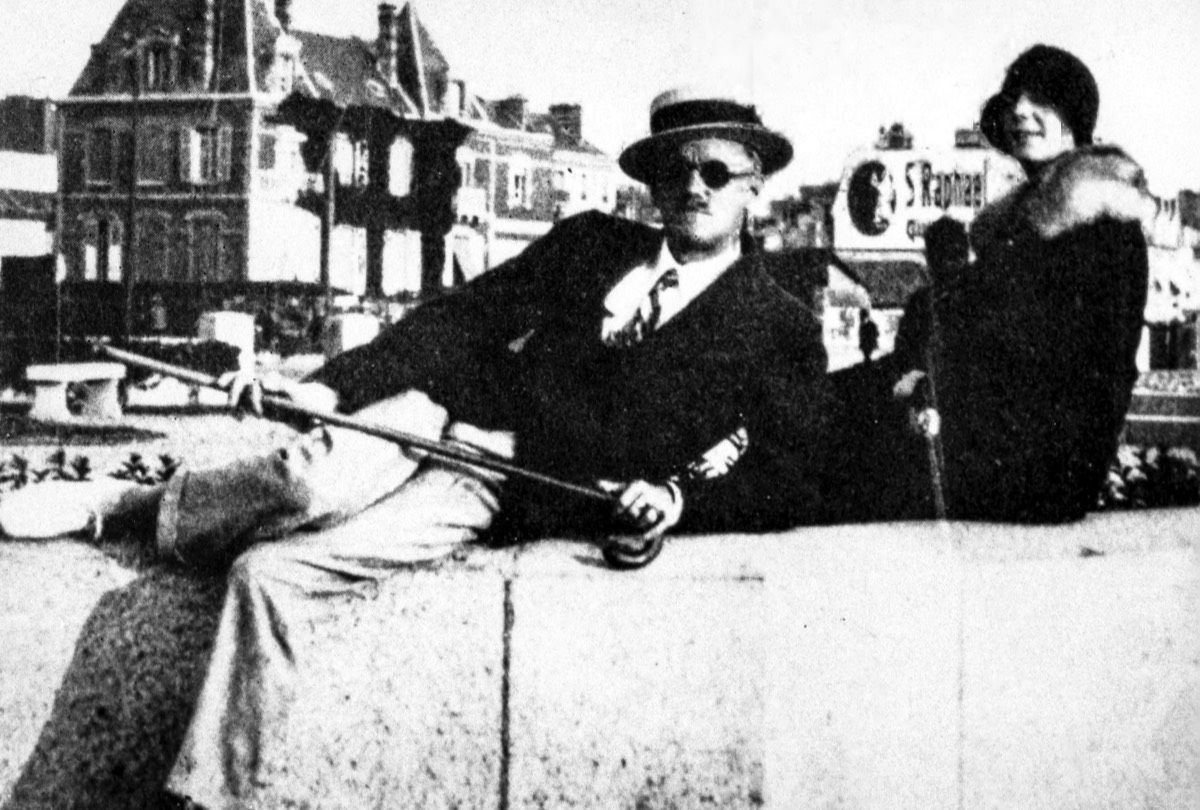
James Joyce and Nora Barnacle. 1930. (Photo by: Marka/UIG via Getty Images)
In “Finnegans Wake” Joyce’s linguistic doubling intertwines the individual with collective consciousness.
Australia is the country most in need of understanding collective consciousness to reconcile our cultural identity. In 2023 a Constitutional Referendum in Australia “The Voice” was a culturally defining moment because in failing it defined the chasm between the collective memory of our ancient Aboriginal indigenous population and modern Australia. Collective consciousness gathered in “Statement from the Heart” could not be understood within the realm of political debate.
James Joyce unravels the stranglehold of myths, history and dogma and gives VOICE within the sounds of language itself to Race Memory. He wrote “Finnegans Wake” to reawaken in language ancient Ireland a carefully orchestrated ‘phonomeical’ journey that permeated the colonial overlay of words with Irish tribal sound memory from time immemorial. The Wake gives us a process in language that cannot be contained in intellect or singular voice it is a cultural ‘sound’ consciousness that comes alive in shared memory through time. It is the story that gets recreated anew by every generation.
James Joyce’s uses phonemes to build collective identity. Jan Baudouin de Courtenay (1845-1929) the Polish linguist introduced the concept of "collective individuality” and named “phonemes as discrete articulatory acoustic units that distinguish meaning.” (Lectures 1877-1878). Baudouin prodigy L.V. Ščerba states that “individual differences are only significant if they find resonance within the collective”
Joyce uses language and content in the Wake as a vehicle for the phonemes making collective memory not just data but alive with a time trail in the language itself.
J.S.Atherton (1967) highlights Joyce’s definition of phonemes “humble indivisibles in this grand continuum” (FW 472.30). Joyce told Eugene Jolas “Really it is not I who am writing this crazy book. It is you, and you, and you, and that man over there, and that girl at the next table.
Greek chorus and ancestral memory held in a polyphony of voices was central to Athenian drama (c. 5th century BC), The chorus absorbed individual suffering into a larger collective consciousness. Aristotle (384BC to 382 BC) shifted this ancient collective memory to rational cognitive memory and this was challenged by Giordano Bruno (1548-1600) who asserted the views of Plotinus that memory is an active power of the soul.
Giambattista Vico's “The New Science” (1725) a work that also absorbed Joyce fuses memory with language as he traces ancestral poetic form and asserts that memory is not magical but historical. He challenges “abstraction that forgets the connection between our present vocabularies and the poetic process through which they were originally formed”. (NS 402).
Australia is the country most in need of understanding collective consciousness to reconcile our cultural identity. In 2023 a Constitutional Referendum in Australia “The Voice” was a culturally defining moment because in failing it defined the chasm between the collective memory of our ancient Aboriginal indigenous population and modern Australia. Collective consciousness gathered in “Statement from the Heart” could not be understood within the realm of political debate.
James Joyce unravels the stranglehold of myths, history and dogma and gives VOICE within the sounds of language itself to Race Memory. He wrote “Finnegans Wake” to reawaken in language ancient Ireland a carefully orchestrated ‘phonomeical’ journey that permeated the colonial overlay of words with Irish tribal sound memory from time immemorial. The Wake gives us a process in language that cannot be contained in intellect or singular voice it is a cultural ‘sound’ consciousness that comes alive in shared memory through time. It is the story that gets recreated anew by every generation.
James Joyce’s uses phonemes to build collective identity. Jan Baudouin de Courtenay (1845-1929) the Polish linguist introduced the concept of "collective individuality” and named “phonemes as discrete articulatory acoustic units that distinguish meaning.” (Lectures 1877-1878). Baudouin prodigy L.V. Ščerba states that “individual differences are only significant if they find resonance within the collective”
Joyce uses language and content in the Wake as a vehicle for the phonemes making collective memory not just data but alive with a time trail in the language itself.
J.S.Atherton (1967) highlights Joyce’s definition of phonemes “humble indivisibles in this grand continuum” (FW 472.30). Joyce told Eugene Jolas “Really it is not I who am writing this crazy book. It is you, and you, and you, and that man over there, and that girl at the next table.
Greek chorus and ancestral memory held in a polyphony of voices was central to Athenian drama (c. 5th century BC), The chorus absorbed individual suffering into a larger collective consciousness. Aristotle (384BC to 382 BC) shifted this ancient collective memory to rational cognitive memory and this was challenged by Giordano Bruno (1548-1600) who asserted the views of Plotinus that memory is an active power of the soul.
Giambattista Vico's “The New Science” (1725) a work that also absorbed Joyce fuses memory with language as he traces ancestral poetic form and asserts that memory is not magical but historical. He challenges “abstraction that forgets the connection between our present vocabularies and the poetic process through which they were originally formed”. (NS 402).
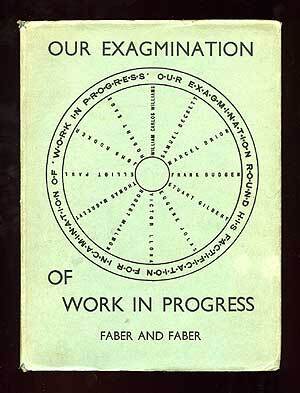
“Our Exagmination Round His Factification for Incamination of Work in Progress”
This is a 1929 collection of critical essays overseen by Joyce to help engagement with his “Work in Progress”. Twelve contributors, a collection of voices with a cover image that echoes The Great Wheel of the Tao, The Hub and Emptiness from Tao Te Ching by Lao Tzu this image of a wheel illustrates the importance of emptiness. “It is the centre hole that makes it useful". This emphasizes that usefulness comes from the void (non-being), allowing the wheel to turn. Joyce uses this symbol to guide us not to look for an all-encompassing definitive explanation of “Finnegans Wake”.
https://zehfilardo.wordpress.com/wp-content/uploads/2012/09/our-exagmination-round-his-factification-for-incamination-of-work-in-progress-searcheable.pdf
The Idea of Time in the Work of James Joyce by Marcel Brion
“Joyce has created his language, either by writing words phonetically —— and Heaven knows such a method is enough to discipline English — or by introducing foreign words and dialect forms, or finally by the wholesale manufacture of words which he requires and which are not to be had at second hand. And it is all done with an unprecedented creative power, with an almost unique fertility of imagination, inexhaustibly reinforced by the incredible extent of his culture. In the field of verbal richness Joyce has annexed the seemingly impregnable position of Rabelais; but whereas in Rabelais, form was under no direction other than that of an amused fantasy, in Joyce it is the handmaid of a philosophy. Work in Progress seems to be based on the historical theory of Vico -— an actual recreation of the world, its ideas and its forms.
Mr. Joyce directs an Irish Word Ballet by Robert Mcalmon
“What is important is the sensations evoked, the sensibilities made susceptible to response, by his writing, and that necessarily varies with each individual reader. The question "but what does it all mean " need not be asked; it means variously, to Joyce himself and to each reader, as a Mozart, or a Beethoven or a Strawinsky symphony means variously to different people and variously to the same persons in various moods and circumstances” (remove line space ) “He cannot forget Dublin, and in his Irish tenor prose lemoncholy way he must sing or be mumbling a Dublin Irish come—all—you in a wistful twilight remembering occasionally Greece and her myths such as a barber whispering to the rushes that Midas has golden ears, or recalling that the twilight of madness descended on Swift”
https://zehfilardo.wordpress.com/wp-content/uploads/2012/09/our-exagmination-round-his-factification-for-incamination-of-work-in-progress-searcheable.pdf
The Idea of Time in the Work of James Joyce by Marcel Brion
“Joyce has created his language, either by writing words phonetically —— and Heaven knows such a method is enough to discipline English — or by introducing foreign words and dialect forms, or finally by the wholesale manufacture of words which he requires and which are not to be had at second hand. And it is all done with an unprecedented creative power, with an almost unique fertility of imagination, inexhaustibly reinforced by the incredible extent of his culture. In the field of verbal richness Joyce has annexed the seemingly impregnable position of Rabelais; but whereas in Rabelais, form was under no direction other than that of an amused fantasy, in Joyce it is the handmaid of a philosophy. Work in Progress seems to be based on the historical theory of Vico -— an actual recreation of the world, its ideas and its forms.
Mr. Joyce directs an Irish Word Ballet by Robert Mcalmon
“What is important is the sensations evoked, the sensibilities made susceptible to response, by his writing, and that necessarily varies with each individual reader. The question "but what does it all mean " need not be asked; it means variously, to Joyce himself and to each reader, as a Mozart, or a Beethoven or a Strawinsky symphony means variously to different people and variously to the same persons in various moods and circumstances” (remove line space ) “He cannot forget Dublin, and in his Irish tenor prose lemoncholy way he must sing or be mumbling a Dublin Irish come—all—you in a wistful twilight remembering occasionally Greece and her myths such as a barber whispering to the rushes that Midas has golden ears, or recalling that the twilight of madness descended on Swift”
Clara Mason will attend the XXX INTERNATIONAL JAMES JOYCE SYMPOSIUM Kraków, Poland 15–19 June 2026 Inspired by Jan Baudouin de Courtenay the Polish linguist her paper is titled “Kracking the CODE in Krakow”
The importance of truth held in the sound of language is highlighted by the Penang poet Cecil Rajendra’s “My Message”, “And now you ask. What is my message. I say with Nabokov. I am a poet. not a postman. I have no message.” click to listen.
Sargon Boulus the Iraqi-Assyrian poet explores language as race memory: “So, when I write my poetry in Arabic . . . sometimes I feel that I am really writing in [all the dead languages that had seen their day centuries ago], because I believe, finally, that any language contains all the dead memories of the races who contributed to it.”
Sargon Boulus the Iraqi-Assyrian poet explores language as race memory: “So, when I write my poetry in Arabic . . . sometimes I feel that I am really writing in [all the dead languages that had seen their day centuries ago], because I believe, finally, that any language contains all the dead memories of the races who contributed to it.”

BLOOMSDAY is the 16th of June 1904 and is the day on which all the action of James Joyce’s novel Ulysses takes place. “Ulysses” by James Joyce was published in Paris in 1922 and every year around the world people gather to read aloud extracts from a book.
1904 map of Joyce's Dublin - 24 locations with page references to "Ulysses"

1
James Joyce Cultural Centre |
35 North Great George’s Street
The permanent exhibit includes the door to number 7 Eccles Street, home of Leopold and Molly Bloom . "I want to give a picture of Dublin so complete that if the city suddenly disappeared from the earth it could be reconstructed out of my book." - James Joyce in conversation with Frank Budgen.
James Joyce Cultural Centre |
35 North Great George’s Street
The permanent exhibit includes the door to number 7 Eccles Street, home of Leopold and Molly Bloom . "I want to give a picture of Dublin so complete that if the city suddenly disappeared from the earth it could be reconstructed out of my book." - James Joyce in conversation with Frank Budgen.
2
Belvedere College |
Great Denmark Street

James Joyce attended Belvedere from 1893-98. In “A Portrait of the Artist as a Young Man” Joyce has his fictional counterpart, Stephen Dedalus, ruminate on the prospect of becoming a Jesuit while at Belvedere.
Belvedere College |
Great Denmark Street
James Joyce attended Belvedere from 1893-98. In “A Portrait of the Artist as a Young Man” Joyce has his fictional counterpart, Stephen Dedalus, ruminate on the prospect of becoming a Jesuit while at Belvedere.
3
St George’s Church |
Hardwicke Place
 James Joyce includes St. George’s Church and its bell-ringing in “Ulysses”. The bells “ tolled the hour: loud dark iron. Heigho! Heigho! Heigho!"
St George’s Church |
Hardwicke Place
4
Number 7 Eccles Street
The home of Leopold and Molly Bloom and where Bloom begins and ends his wanderings in Ulysses. Joyce visited this house when he went to see his friend John Francis Byrne who lived here in 1909.
Read Breakfast at 7 Eccles Street ULYSSES CALYPSO 65-85
Number 7 Eccles Street
The home of Leopold and Molly Bloom and where Bloom begins and ends his wanderings in Ulysses. Joyce visited this house when he went to see his friend John Francis Byrne who lived here in 1909.
Read Breakfast at 7 Eccles Street ULYSSES CALYPSO 65-85
5
Glasnevin Cemetery
Paddy Dignam and Michael Cusack (the Citizen) are buried here and Joyce’s father John Stanislaus Joyce. “Mr Bloom walked unheeded along his grove by saddened angels, crosses, broken pillars, family vaults, stone hopes praying with upcast eyes, old Ireland's hearts and hands.”.
Read Dignams’s Funeral ULYSSES HADES 107-147
Glasnevin Cemetery
Paddy Dignam and Michael Cusack (the Citizen) are buried here and Joyce’s father John Stanislaus Joyce. “Mr Bloom walked unheeded along his grove by saddened angels, crosses, broken pillars, family vaults, stone hopes praying with upcast eyes, old Ireland's hearts and hands.”.
Read Dignams’s Funeral ULYSSES HADES 107-147
6
Gresham Hotel |
23 Upper O’Connell Street

The location for the final part of Joyce’s beautiful short story “The Dead” “His soul had approached that region where dwell the vast hosts of the dead. He was conscious of, but could not apprehend, their wayward and flickering existence. His own identity was fading out into a grey impalpable world…”
Gresham Hotel |
23 Upper O’Connell Street
The location for the final part of Joyce’s beautiful short story “The Dead” “His soul had approached that region where dwell the vast hosts of the dead. He was conscious of, but could not apprehend, their wayward and flickering existence. His own identity was fading out into a grey impalpable world…”
7
The Joyce Statue |
North Earl Street

In the Heart of the Hibernian Metropolis there is a life-sized statue of James Joyce just off O’Connell Street and near to the GPO. Erected in 1990, the statue, was created by US sculptor Marjorie Fitzgibbon.
The Joyce Statue |
North Earl Street
In the Heart of the Hibernian Metropolis there is a life-sized statue of James Joyce just off O’Connell Street and near to the GPO. Erected in 1990, the statue, was created by US sculptor Marjorie Fitzgibbon.
8
O’Connell Bridge
Leopold Bloom stops on O’Connell Bridge to feed the seagulls Banbury cakes. Here you cross over the River Liffey which was immortalized as Anna Livia Plurabelle in “Finnegans Wake”.
Read Lunchtime in Dublin ULYSSES LESTRYGONIANS 190-234
O’Connell Bridge
Leopold Bloom stops on O’Connell Bridge to feed the seagulls Banbury cakes. Here you cross over the River Liffey which was immortalized as Anna Livia Plurabelle in “Finnegans Wake”.
Read Lunchtime in Dublin ULYSSES LESTRYGONIANS 190-234
9
Night Town |
James Joyce Street
James Joyce Street was originally called Mabbot Street which was the entrance to the red light ‘Monto’ area in Dublin. It is the setting of the Circe episode in Ulysses.The Mabbot street entrance of nighttown, before which stretches an uncobbled tram-siding set with skeleton tracks, red and green will-o’-the-wisps and danger signals.
Read The brothel at the bewitching hour ULYSSES CIRCE 561-703
Night Town |
James Joyce Street
James Joyce Street was originally called Mabbot Street which was the entrance to the red light ‘Monto’ area in Dublin. It is the setting of the Circe episode in Ulysses.The Mabbot street entrance of nighttown, before which stretches an uncobbled tram-siding set with skeleton tracks, red and green will-o’-the-wisps and danger signals.
Read The brothel at the bewitching hour ULYSSES CIRCE 561-703
10
Cabman’s Shelter |
Butt Bridge
In the Eumaeus episode in Ulysses, Bloom and Stephen stop at the cabman’s shelter, just north of the Liffey, for a bite to eat and a cup of coffee. It is patronized by a ‘miscellaneous collection of waifs and strays and other nondescript specimens’. It no longer exists.
Read Cabman's shelter ULYSSES EUMAEUS 704-776
Cabman’s Shelter |
Butt Bridge
In the Eumaeus episode in Ulysses, Bloom and Stephen stop at the cabman’s shelter, just north of the Liffey, for a bite to eat and a cup of coffee. It is patronized by a ‘miscellaneous collection of waifs and strays and other nondescript specimens’. It no longer exists.
Read Cabman's shelter ULYSSES EUMAEUS 704-776
11
North Wall Quay
This is where James Joyce and Nora Barnacle left Ireland on October 8th, 1904. It is also the setting for the short story “Eveline” from Dubliners. “She stood among the swaying crowd in the station at the North Wall. He held her hand and she knew that he was speaking to her, saying something about the passage over and over again” .
North Wall Quay
This is where James Joyce and Nora Barnacle left Ireland on October 8th, 1904. It is also the setting for the short story “Eveline” from Dubliners. “She stood among the swaying crowd in the station at the North Wall. He held her hand and she knew that he was speaking to her, saying something about the passage over and over again” .
12
Sweny’s Chemist |
1 Lincoln Place

Leopold Blooom goes to Sweny's to order some orange flower and whitewax skin lotion for his wife. He also picks up a bar of lemon soap, promising Mr Sweny to come back later to pay - a promise he forgets to keep.
Read Henry Flower ULYSSES LOTUS-EATERS 85-107
Sweny’s Chemist |
1 Lincoln Place
Leopold Blooom goes to Sweny's to order some orange flower and whitewax skin lotion for his wife. He also picks up a bar of lemon soap, promising Mr Sweny to come back later to pay - a promise he forgets to keep.
Read Henry Flower ULYSSES LOTUS-EATERS 85-107
13
The National Maternity Hospital |
Holles Street

Stephen Dedalus in drunken late night conversation with three medical students (Dixon, Lynch, and Madden). Mr. Bloom arrives to enquire about Mrs. Purefoy, who has been in labour for three days and rescues Stephen.
Read Holles Street Hospital ULYSSES OXEN OF THE SUN 499-561
The National Maternity Hospital |
Holles Street
Stephen Dedalus in drunken late night conversation with three medical students (Dixon, Lynch, and Madden). Mr. Bloom arrives to enquire about Mrs. Purefoy, who has been in labour for three days and rescues Stephen.
Read Holles Street Hospital ULYSSES OXEN OF THE SUN 499-561
14
Finn’s Hotel |
Leinster Street
On the afternoon of the 10th of June 1904, James Joyce first laid eyes on his future wife Nora Barnacle as she stepped out of Finn’s Hotel where she worked as a chamber maid. They had their first date six days later and he cast the action of Ulysses on that day, 16 June.
Finn’s Hotel |
Leinster Street
On the afternoon of the 10th of June 1904, James Joyce first laid eyes on his future wife Nora Barnacle as she stepped out of Finn’s Hotel where she worked as a chamber maid. They had their first date six days later and he cast the action of Ulysses on that day, 16 June.
15
The National Library |
Kildare Street
 This beautiful building, designed by Thomas Newenhan Dean, is featured prominently in the Scylla and Charybdis episode in Ulysses.
Read The National Library ULYSSES SCYLLA AND CHARYBDIS 235-280
The National Library |
Kildare Street
Read The National Library ULYSSES SCYLLA AND CHARYBDIS 235-280
16
Davy Byrnes |
21 Duke Street
 Bloom enjoyed lunch here, a gorgonzola sandwich and a glass of Burgundy wine. “Tom Kernan can dress. Puts gusto into it. Pure olive oil. Milly served me that cutlet with a sprig of parsley. Take one Spanish onion. God made food, the devil the cooks.”.
Read Lunchtime in Dublin ULYSSES LESTRYGONIANS 190-234
Davy Byrnes |
21 Duke Street
Read Lunchtime in Dublin ULYSSES LESTRYGONIANS 190-234
17
UCD Newman House |
85–86 St. Stephen’s Green
James Joyce was a student here before graduating with a BA in 1902. It features in A Portrait of the Artist as a Young Man. It is now the site of MOLI, The Museum of Literature Ireland.
UCD Newman House |
85–86 St. Stephen’s Green
James Joyce was a student here before graduating with a BA in 1902. It features in A Portrait of the Artist as a Young Man. It is now the site of MOLI, The Museum of Literature Ireland.
18
Volta Cinema |
Mary Street

James Joyce visiting from Trieste founded the Volta Cinema, Ireland’s first dedicated cinema on Mary Street in 1909. It opened on Monday 20 December, 1909 to a select audience.
Volta Cinema |
Mary Street
James Joyce visiting from Trieste founded the Volta Cinema, Ireland’s first dedicated cinema on Mary Street in 1909. It opened on Monday 20 December, 1909 to a select audience.
19
Barney Kiernan’s Pub |
8-10 Little Britain Street

The pub is the scene for the Cyclops episode in Ulysses where we meet the Citizen, based on the real-life character of Michael Cusack, founder of the Gaelic Athletic Association (GAA).”So we turned into Barney Kiernan’s and there, sure enough, was the citizen”.
Read Kiernan's Pub ULYSSES CYCLOPS 376-449
Barney Kiernan’s Pub |
8-10 Little Britain Street
The pub is the scene for the Cyclops episode in Ulysses where we meet the Citizen, based on the real-life character of Michael Cusack, founder of the Gaelic Athletic Association (GAA).”So we turned into Barney Kiernan’s and there, sure enough, was the citizen”.
Read Kiernan's Pub ULYSSES CYCLOPS 376-449
20
Ormond Hotel |
7-11 Upper Ormond Quay
Bloom carefully avoids being seen by Boylan as he enters the dining room of the Ormond Hotel and absorbed in listening to the fine musicianship on the piano decides it must be Father Cowley.
Read Concert at the Ormond Hotel ULYSSES SIRENS 328-376
Ormond Hotel |
7-11 Upper Ormond Quay
Bloom carefully avoids being seen by Boylan as he enters the dining room of the Ormond Hotel and absorbed in listening to the fine musicianship on the piano decides it must be Father Cowley.
Read Concert at the Ormond Hotel ULYSSES SIRENS 328-376
21
The Dead House |
15 Usher’s Island

The house at 15 Usher’s Island is the setting for the Morkan Sisters’ annual Christmas party in the short story “The Dead”. The setting is based on the actual home of maternal aunts of Joyce’s mother, known as the Misses Flynn. The house faces on to the James Joyce Bridge which was opened on 16 June, 2003.
The Dead House |
15 Usher’s Island
The house at 15 Usher’s Island is the setting for the Morkan Sisters’ annual Christmas party in the short story “The Dead”. The setting is based on the actual home of maternal aunts of Joyce’s mother, known as the Misses Flynn. The house faces on to the James Joyce Bridge which was opened on 16 June, 2003.
22
Sandymount Strand

Stephen Dedalus takes a morning walk on Sandymount Strand. In the evening Leopold Bloom watches the colourful display from the Mirus Bazaar fireworks with Gertie McDowell. “Am I walking into eternity along Sandymount strand?“.
Read Stephen on Sandymount Strand ULYSSES PROTEUS 45-64
Sandymount Strand
Stephen Dedalus takes a morning walk on Sandymount Strand. In the evening Leopold Bloom watches the colourful display from the Mirus Bazaar fireworks with Gertie McDowell. “Am I walking into eternity along Sandymount strand?“.
Read Stephen on Sandymount Strand ULYSSES PROTEUS 45-64
23
Sandycove Tower

Ulysses begins in the Martello Tower in Sandycove, just south of Dublin, at 8:00 am on the morning of June 16th, 1904. Buck Mulligan calls to his friend Stephen Dedalus to come join him in the morning air. "Stately, plump Buck Mulligan came from the stairhead, bearing a bowl of lather on which a mirror and a razor lay crossed.".
Read Breakfast at the Martello Tower ULYSSES TELEMACHOS 1-28
Sandycove Tower
Ulysses begins in the Martello Tower in Sandycove, just south of Dublin, at 8:00 am on the morning of June 16th, 1904. Buck Mulligan calls to his friend Stephen Dedalus to come join him in the morning air. "Stately, plump Buck Mulligan came from the stairhead, bearing a bowl of lather on which a mirror and a razor lay crossed.".
Read Breakfast at the Martello Tower ULYSSES TELEMACHOS 1-28
24
The School |
Summerfield, Dalkey Avenue
Stephen Dedalus is a teacher in Mr. Deasy’s school for boys in Dalkey. Mr. Deasy asserts that Stephen was ‘not born to be a teacher’. Stephen agrees, claiming that he’s ‘a learner rather’.
Read Stephen at school ULYSSES NESTOR 28-45
The School |
Summerfield, Dalkey Avenue
Stephen Dedalus is a teacher in Mr. Deasy’s school for boys in Dalkey. Mr. Deasy asserts that Stephen was ‘not born to be a teacher’. Stephen agrees, claiming that he’s ‘a learner rather’.
Read Stephen at school ULYSSES NESTOR 28-45